|
= | |
|---|
As birthright citizens of the US, Puerto Ricans (Boricuas) like Bad Bunny/ Benito Antonio Martinez Ocasio (BAMO) stand apart from all other Latinxs.
(l am calling him BAMO to play on BAMN - By Any Means Necessary; O = Optional)
The vast majority of Latinx people in the US are Mexican. ICE has visibly abducted and detained Indigenous people, Boricuas, other American citizens, as well as legal residents. However, members of these populations cannot be legally deported. The present US president has repeatedly stated that it wants to end birthright citizenship. The majority of immigrants are Latinx, but people from all over the world enter the US illegally, often having been trafficked. Boricuas are so differently situated than all other Latinx identities that there is a (small yet visible) Spanish reunification movement in Puerto Rico. Platforming a birthright citizen from a US terroritory is a red herring that decenters accountability the US owes the backbone of its labor force, immigrants.
Adelante Reunificacionistas is a movement founded in 2017 (1st year of the 1st Trump administration) in Puerto Rico that advocates for rejoining Spain as an autonomous community like the Canary Islands or Andalucia. They are small but vocal. Even more astoundingly, this movement frames reunification with Spain as decolonization.
This is unfathomable to people who have other Latin American identities, whose nation states gained independence from Spain in the process of decolonization. These nation states decolonized not because of Spain willingly giving up control, but because colonial Spain reached a state of entropy.
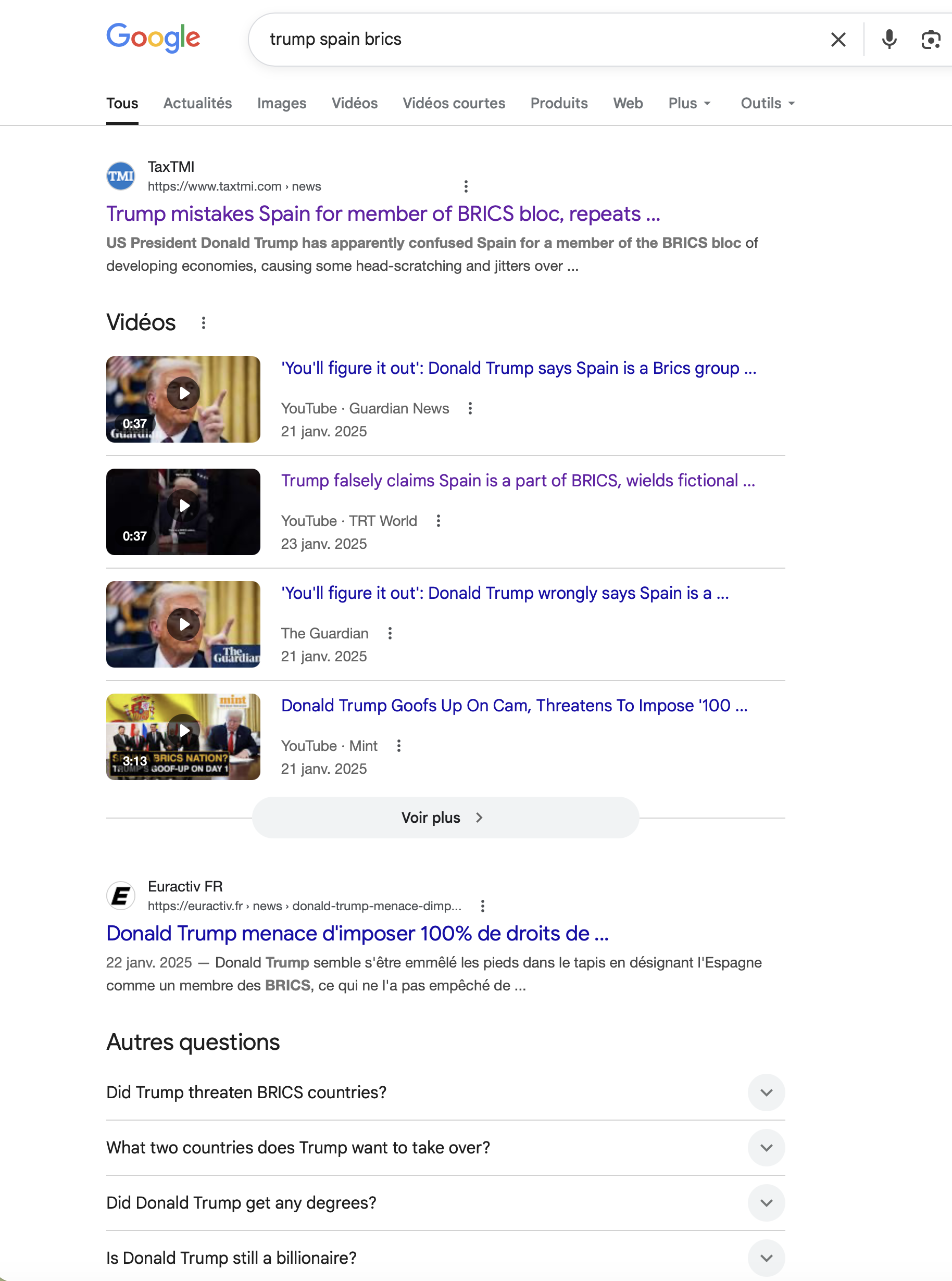
2 weeks prior to the show, a White House spectacle had already platformed Spain, characterizing it as an antagonistic power to the US, with UK news outlet The Guardian providing the necessary context for the COIN narrative: "You'll figure it out." The Guardian will give further COIN narrative context 2 weeks later when it centers the Zara outfit at the Halftime Show.
There are different political movements addressing PR's status in the nation state world order, such as (US) statehood movements and independence movements. How can a Spanish reunification movement exist in Latin America?
Puerto Ricans were never immigrants to the US. PR was never sovereign in the nation state world order. It was a Spanish Crown Colony for 400 years, then annexed by the US as an overseas Territory after the Spanish American War of 1898. While Cuba gained independence from the US in 1902, Puerto Rico remained a US territory. Boricuas gained US birthright citizenship in 1917.
The majority of Puerto Ricans' ancestors were emigrants from mainland Spain and the Canary Islands to the crown colony. Many Puerto Rican families still have a strong cultural connection to Spain.
Scholar Harry Franqui-Rivera wrote this blog post in which he states:
BloombergView calls for the elimination of the Federal Minimum Wage and too many Puerto Ricans are buying that line. I’m not surprised; I hear that same line whenever I visit the island. Many argue that not only does the FMW stifle the economy but that it makes commodities more expensive for the middle class because the working poor have more money to spend. I’m not kidding you, if I had a penny for every time I’ve heard that argument I could help pay Puerto Rico’s public debt.On March 18, 2026, The New York Times published an expose on United Farm Workers cofounder Cesar Chavez grooming and molesting children. We also find out that he stood against illegal immigrants entering the agricultural work force in the US.
It may appear that this news is surfacing at this time to negatively impact Latinx.
However, this shocking news renders talking about BAMO as trivial. They now talk about Chavez and Huerta, and centers feminist demands within the movement among Mexicans.
But it does not address the fascist dog whistle component:
"If a labor rights icon was a pedo, advocating for Spanish reunification by this cute boy isn't a big deal. Ted Cruz being a fascist isn't a big deal. Was colonialism that bad?"l've heard people under 30 who are from Spain, who want to be on friendly terms with me(?), say:
"Spain gave savage pagans rule of law. Colonialism by Spain was a long time ago. America is the real problem." "You claim to be decolonial, but you say you are American; that's huge. I have Colombian friends, they are also Americans."Brains fried? Let's be more precise. More discussion in a separate section.
In my hometown San Francisco, Cesar Chavez Street was named after him when he died in 1993. Its former name was Army Street. The city of San Jose has already covered up Chavez's name from some monuments. Maybe the name will get reverted to Army Street. Given the current push to armament, this name would fit the agenda; it is also too obvious and diarupts the counterinsurgency propaganda.
Huerta is leading a response that decenters persobality cults and centers feminist demands.
A local news site did a survey of people walking on Cesar Chavez Street about what they want it to be renamed to, some people did say Army Street, but nobody said Dolores Huerta Street.
It looks like neighborhood people (in this Latinx neighborhood) do not feel connected to United Farm Workers. This is my neighborhood, the Mission, which used to be a Mexican neighborhood, but the residents are now mostly Salvadorians. Aside from this, unions have not been relavant for immigrants arriving after the 70s.
Illegal immigrants form the backbone of the labor market exactly because they have no rights and are de facto criminals.
Historically, slavery in the US is characterized by violent harm, human trafficking, severe abuse, disposal, and generational forced labor of a particular racialized population. Minor children born to immigrants who entered the US illegally are birthright US citizens, yet they are often also forced to labor. Farm owners continue to exploit a federal law that allows child labor by kids starting at 12 years old. This law was justified by the argument that children in rural families should be able to help out on the farm. This news article describes this law and the decades-long California Mexican American led attempts to repeal it.
Platforming a birthright citizen who is not part of this slavery system as representative of push back against immigration raids is a red herring. It distracts from the central issue: the imperative for giving rights and legal status to the backbone of labor in the US, not to be nice, but to preserve the labor force.
The focus is shifted, instead, to the executive branch's threat of ending birthright citizenship. This is much more difficult to accomplish than depriving illegal immigrants of life and liberty. But this threat is made plausible by the juxtaposition of outrageous murders of white citizens in Minnesota in January 2026.
Segments of the US government has extensively studied and deployed 'trauma conditioned mind control' to the general public over generations. This was proven by large volumes of evidence related to the MKULtra program ran by the CIA. Traumatic images being mass distributed, graphic user content not being censored, even BAMO's album title itself Debi Tirar Más Photos, are not incidental. These traumas variously suppress conflicts from surfacing for resolution, or drive social conflict when it serves the agenda.
For racialized people with legal status, whom ICE also target, it triggers fear responses that often entail falling back on conditioned adherence to racial hierarchy. Going along with focusing on the red herring of possible withdrawal of birthright citizenship is attractive because it stays away from the difficult, if not life threatening, central issue of the need to protect ICE targets. They wear the same label, Latin American, but are not in community anyway. The community that would form around protecting birthright citizenship would appear much more rewarding.
Finally, getting behind saving birthright citizenship may appear to people with political ambition as more important than protecting immigrants. Illegal immigrants (and legal residents) cannot vote after all.
Centering BAMO forces the dialog to shift toward race instead of pushing for policy to deter/ end the systemic positioning of people into precarious positions such that they are open to exploitation.
Intersectionality matters. BAMO has humble beginnings, but he is famous, privileged, and most importantly to this discussion, it's not possible for him to be an immigrant to the US.
There is active confounding of racism with the issue of modern day slavery. They are intertwined, but not the same. As discussed, people from all over the world enter the US illegally by sea and through the southern border, often being trafficked. But a person who is completely removed from that demographic becomes their representative.
Direct action to help people in such position is actively being discouraged. In Minnesota, it is being shown that helping people targeted by ICE can lead to an instant execution.
The spectator is given an opportunity to intellectually override the fact of Latin Americans being far from homogenous. It encourages disregard for differences between people within this racial demographic by those holding both pro and anti immigrant positions respectively. In the official language of the federal government, this population is called 'Hispanic'. The word looks like Hispaniola, the name of the island. 'Hispanic' includes people from Spain, but not Haitians, who also speak a Latin based language (but it's not Spanish.) Brazilians are not Hispanic or Latinx, because this racial category was defined in 1997 by the Clinton administration as "of Spanish cultural origin regardless of race". (A short read about the Latinx identity as defined by the US government.) The difficulty of verbally reasoning out of confounding North, Central, & South American/ Latinx identities is weaponized to feed conflict. From a counterinsugency stand point, the definitions were designed for this use. Plenty of peoples of the so-called Americas whose homes are in countries that use Spanish as the official language are not culturally Spanish/ speak Spanish, yet they would be classified as Latinx.
In the US, the vast majority of Latinxs are Mexican, with Puerto Ricans being a distant second in numbers. There are further significant populations of other Latinx nationals. People of different Latinx nationalities converge in different geographical areas in the US, with large numbers of Mexicans in the southwestern US, and Puerto Ricans converging in New York, Florida, and the eastern seaboard. The numbers of Mexicans are vast and they populate all states.
In this section, l discuss the difference between Mexican national identity vs the Boricua identity in relations to Spanish colonialism.
|
The (self identified) Mexicans who are counted by the US census comprise 60% of the total Latinx population. Puerto Ricans in the US are less than 1/6 of that number. Many more Mexicans are in the US than these numbers; they, and all other Latinxs except Boricuas need a visa (or entry card) to enter the US legally. A large number of people enter the US illegally. This population of immigrants is the backbone of labor in the US. That's the basis for confounding Latinx and immigrants itself. Puerto Ricans stand apart from all other Latinx groups because they have birthright American citizenship and can enter the US freely without a visa or passport. Their numbers from the census are much more accurate to actual numbers compared to other Latinx. |
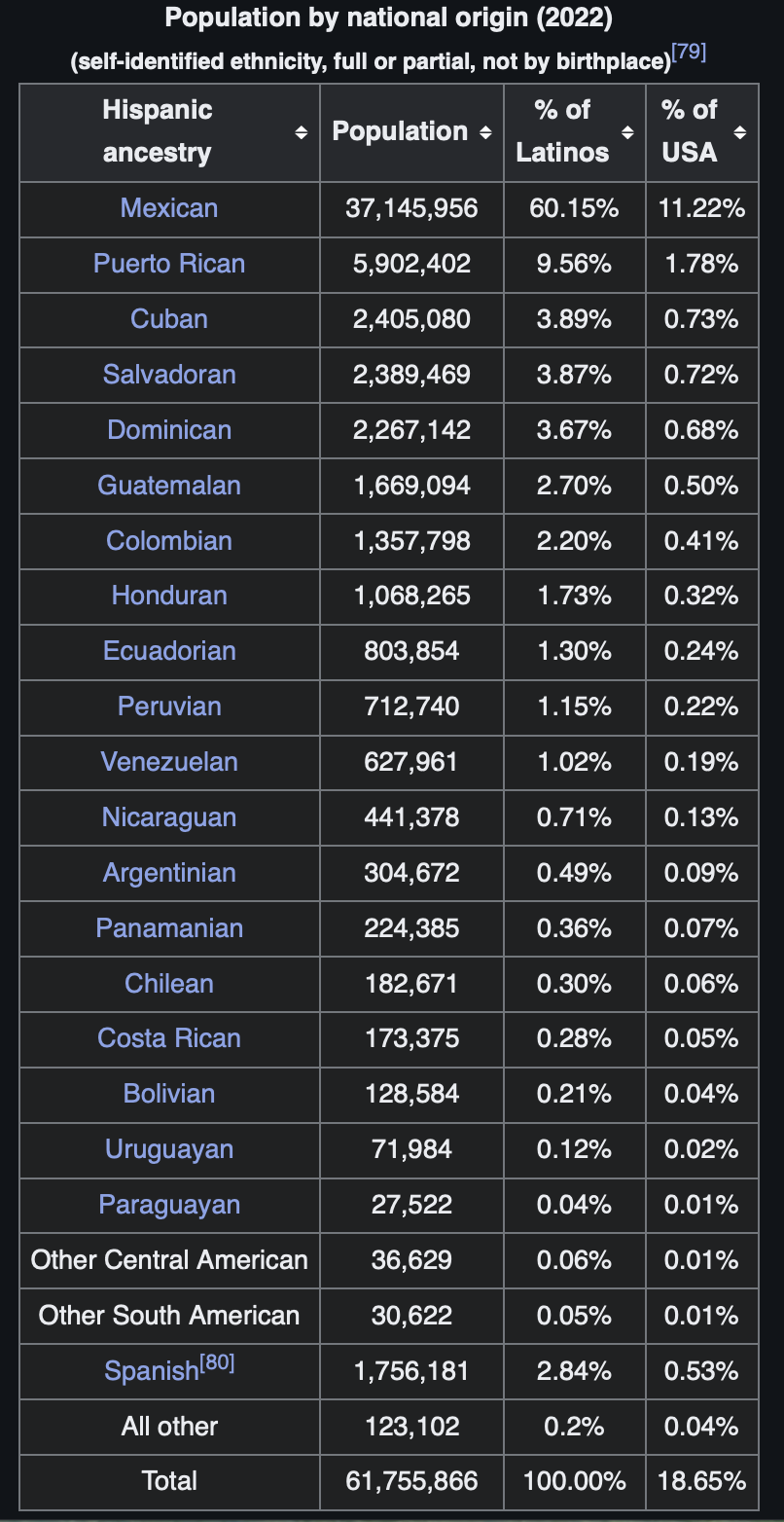 source: the US census 2022 |
|---|
As the vast majority, people with the Mexican identity are the major force in Latinx in the US, but Selena Gomez is an exception, and she is raised American being half Mexican. Her name evokes the memory of Selena Quintanilla, who was murdered at age 23. She was portrayed in film by a Puerto Rican actress/ pop star whose career was boosted by the role. Contemporary US Latin music stars who get platformed are mostly Puerto Rican.
Cardi B is Dominican, and she platformed her Caribbean identity when she first blew up. Over the course of her career, she increasingly presents herself as black, not Latina. Further, she decreased her self representation as a gang member (anti-establishment), and increased emphasis on being a sex worker (labor).
Mexico and other Latin American states are home to indigenous peoples who maintain their cultures. Against the backdrop of complex relationships between people with different indigenous, Mestizo, and Criollo identities, indigenous cultures form solid foundations against colonial mentality.
Peoples who connect to the place they live within native cultural contexts always exhibit a firm stance against colonialist exploitation. Indigenous resistance in Mexico predates the War of Independence from Spain (1810-1821). Their ingrained sense of sovereignty always affect significantly the culture of the regime/ nation state within whose claimed boundaries these indigenous cultures are rooted. One example besides Mexico is the United States.
Less than 40 years after Mexican independence from Spain, in 1858, Benito Juárez, a Zapotec, became the first indigenous president of Mexico. He remains a celebrated figure, whose birthday is a national holiday. Indigeneity has always been a major force and source of identity for Mexicans. The name Mexico itself is from the native Nahuatl language. Most Mexicans do not identify with Spain.
Puerto Rico, like other Caribbean islands in the so-called West Indies, was home to Taino, who were designated as "extinct" by Eurocentric Spanish scholarship from 1802 until recent decades. For 400 years, Puerto Rico was a Spanish colony prior to its rule by the US from 1898. Most contemporary Boricuas have mixed ancestry from (matrilineal) Taino, Africa, and Spain.
Taino culture did not survive genocide by Spanish colonization. Taino DNA was passed down through Taino women who had children with Spanish males. Taino men were removed from their homes to labor in mines and plantations to their death by the Spanish. 80-90% of Taino, who were estimated to number 3 million at first contact with Spain, died within 30 years. Colonizers from different countries commonly impregnated or forced marriage on native and enslaved women to produce more bodies for exploitation.
In the 2010 census, around 34,000 people in Puerto Rico identified as indigenous of different lexical designations, including "native" and "Taino". Some Boricuas have led Taino culture revival in the past decade; the practices are reconstructed, because colonialism has decimated Taino population and culture within 30 years of first contact. The Taino language has been extinct for hundreds of years. There are several reconstructed pseudo Taino languages today.
In the nation state world order, Puerto Rico’s defining characteristic is that of being a non-nation state that seeks to increase its rights. There are many similarities to the Canary Islands. First, because emigration of Canary Isleños was legally required by Spain for a time in the 17-18th centuries to populate the Americas with Spanish people, and emigration continued when the law was no longer in effect. Second, because of the decimation of indigenous populations that became supplanted by Spanish and African populations. Conquistadors with African ancestry arrived at the beginning of contact as part of the Spanish conquest. Most Afroboricua have ancestors who were enslaved but not by the Spanish. Mining in Puerto Rico halted in the 16th century, when there was no more gold. The Spanish encouraged immigration of freed black people and fugitive slaves from non-Spanish colonies to emigrate to Puerto Rico in order to destabilize competitors. Spain increased slavery in the 19th century for cane production in Puerto Rico, but they were able to buy their freedom.
The animosity toward Spain is much lower for Puerto Ricans than other Latinx identities.
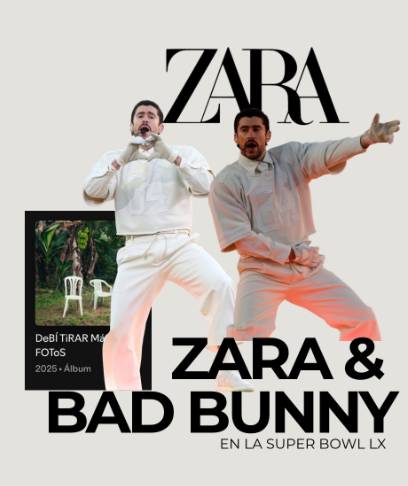
The outfit that Bad Bunny wore at the halftime show is a major focus of his performance. It was designed and made by Spanish fast fashion label Zara, part of Inditex. The conglomerate is based in A Coruna, in the Galicia region of north western Spain, geographically and culturally close to Ferrol, the birthplace of fascist dictator Francisco Franco. Many Puerto Ricans also trace their roots to Galicia because of mass emigration in 19th to early 20th century. Zara enables human trafficking in outsourcing production facilities that it vets carefully. Garment workers today continue to earn wages set to be below the amount they need to get their basic needs met. Luxury labels also use slave labor, but fast fashion amplifies this exploitation model because it deemphasizes the positive cultural element of fashion as art, and emphasizes oppressive practices in favor of profit.
Past headlines and performers of the Super Bowl Halftime Show always wore custom designed stage outfits by designers and/ or luxury fashion labels. The deviation from the norm by Bad Bunny is one of the points highlighted by media. A quick Google search returns the headline of this article from the British news paper "The Guardian" reads ‘A statement about power shifting’: why Bad Bunny wore Zara for his Super Bowl show. England was also a major colonizer, a competitor of colonial Spain, that declined significantly post-decolonization. This headline does not state where the power is shifting to; the word Zara will stand out. Spanish businesses have not had success post World War 2, Zara is a rare exception. People also know that Zara is from Spain. In the headline, the word "Zara" represents "Spain".
Colonization reproduces internal oppression over many generations. Colonial mentality dictates that a colonized population self evaluate as being inferior to the colonizer culture habitually, as if it is a natural response. The mechanism of colonialism functions similarly to class. Those who have colonizer identities are also traumatized to constantly center themselves in their culture and language. This ensures reproduction of class and colonialism.
This book is a Neoliberal academic argument stating sweatshop labor is ethical.
Bad Bunny Bowl appeals to the pessimism of colonized peoples who carry the weight of their internalized inferiority. Different people respond in different fashions to trauma triggers. Its function is to divide.
The bulk of this text, the above sections, were written in preparation for an activism festival that took place starting February 28. On that day, the US and Israeli military attacked Iran and Lebanon. Spain was the sole opposition of the war in NATO. l saw this broadcasted to me:
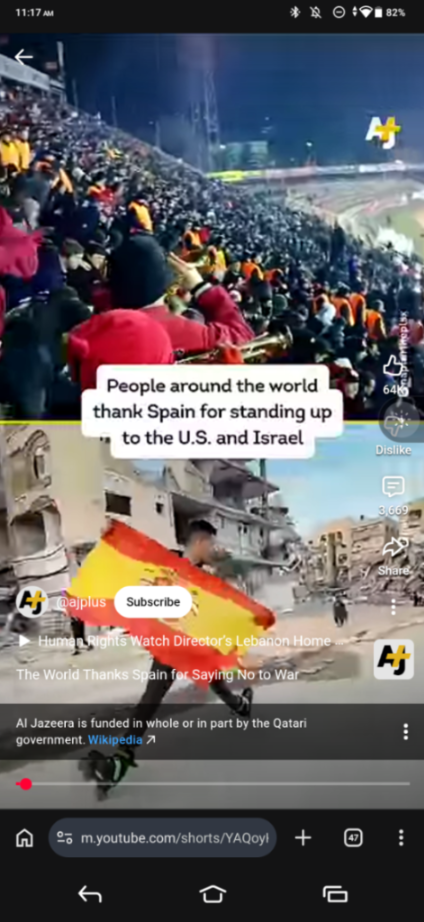
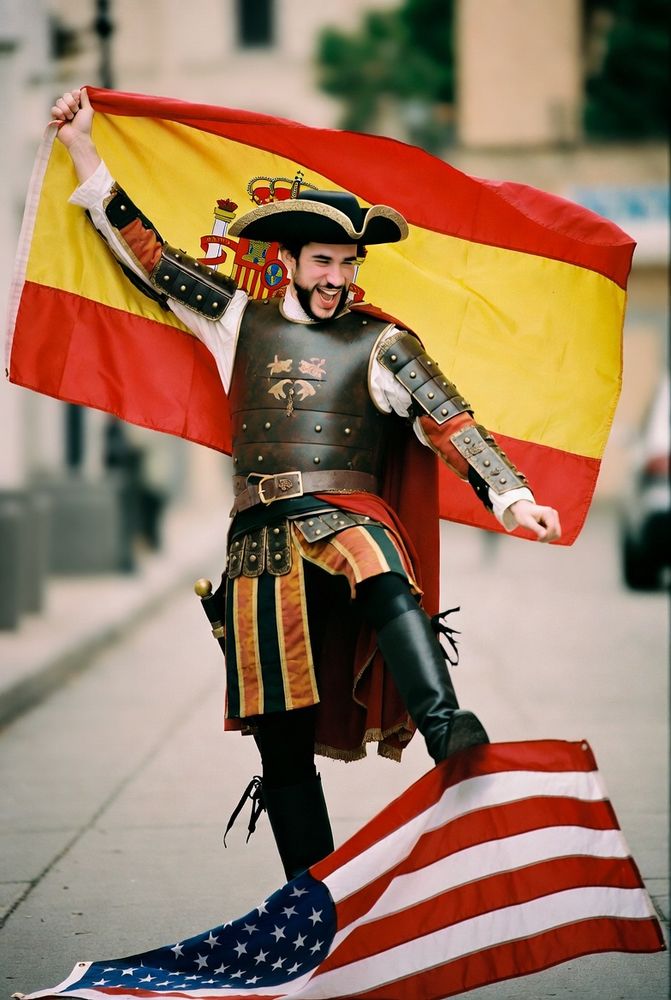
A person in a Muslim country waving a Spanish flag is mind blowing.
Spain was literally founded on Islamophobia. simply look up the "Reconquista" or Christian "reconquest" of the Iberian peninsula.
This imagery is a dog whistle for people who are still stuck in the Crusades. Christofascism is a major block within the fascist movement. While politically left people and others cannot fathom such arcane focus, it is absolutely a thing.
Coupled with the above described platforming of Spain by the US music industry via BAMO, the intent to platform Spain is salient. Spain has unleashed substantial counterinsugency, coordinate with the EU, upon separatist movements in Catalonia and Basque Country. No nation state is moral, and Spain is the original colonizer. Appealing to colonial mentality is a pivot to classical colonialism.
Latinxs in the US must make bigger demands than ever. United Farm Workers was only about labor rights, which has transformed to mean middle class/ citizens' rights. The movement can either expand the scope to include all agricultural laborers-- all laborers, or it will have no defense against the shock.
Revelations of heinous behavior by an idolized figure is an opportunity to eliminate personality cults. It is even more effective than calling out a pop star capitulating to colonialism, to completely reorient people's ideas about leadership.
By coming forward, Dolores Huerta is a living leader who is visibly tearing down patriarchy. Military analysis may project that the perponderance of machismo in the Mexican community will render her moot, especially when she is depicted as a victim. Women have been terrorized and oppressed in Latin America. The people that Chavez meant something to are not the agricultural workers of today. They have citizenship privileges, they vote. This is the moment that Barbara Ransby described as "overplaying their hand", when media that is intended to demoralize actually energize the movement. People have an imperative to change their attitudes, or else the movement goes down.